On March 27, the National Press and Publication Administration officially announced the winners of the 6th China Publishing Government Award. A History of Modern and Contemporary Chinese Handicraft Industry, edited by Professor Peng Nansheng, former Vice President of Central China Normal University and Director of the Institute of Modern Chinese History, has received this honor. It marks another landmark achievement of our university in the fields of modern Chinese history and economic history.
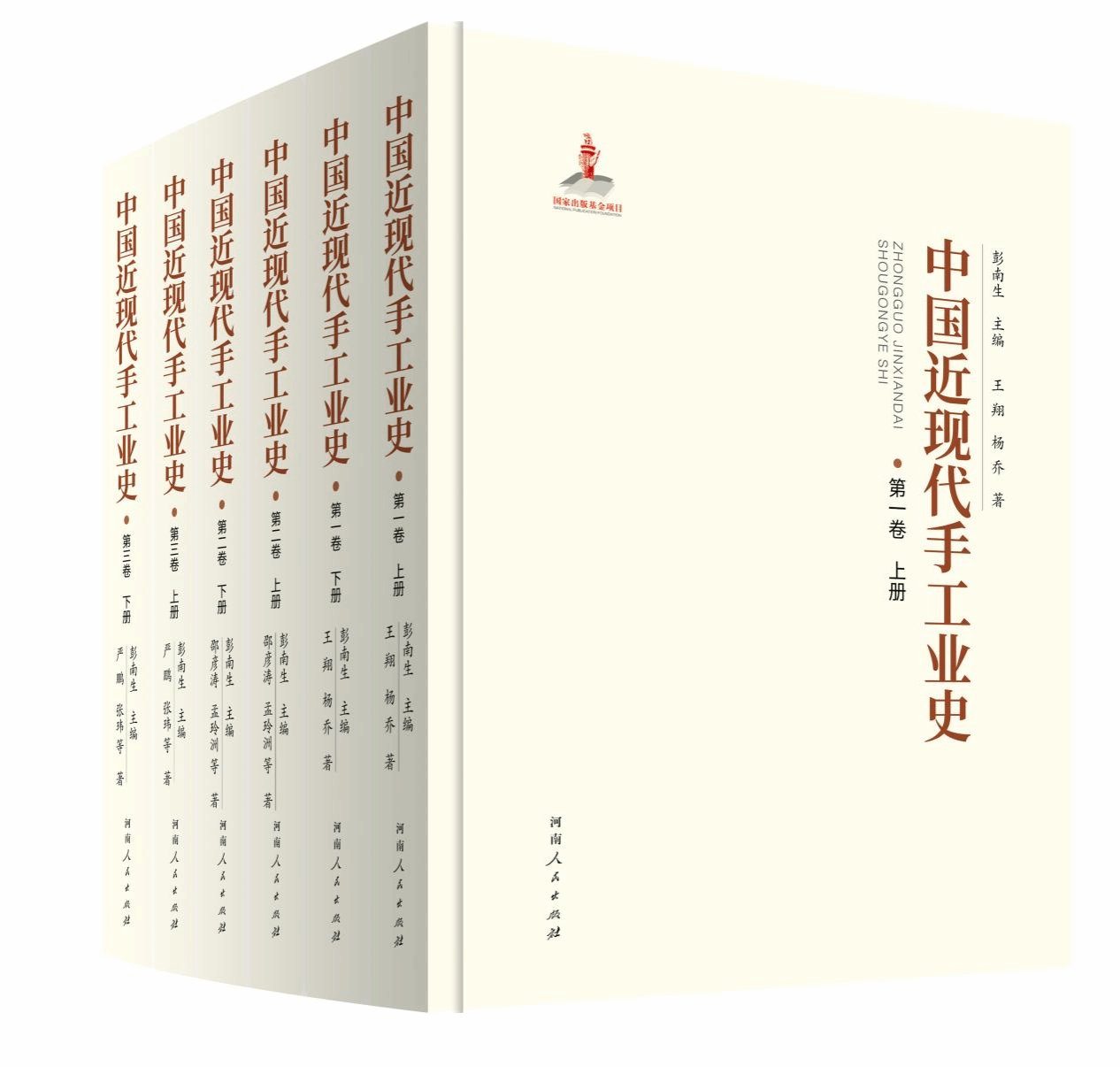
This book is the final research output of a major bidding project funded by the National Social Science Fund of China (with rolling support). It has been selected into the 13th Five-Year Plan for National Key Publications and subsidized by the National Publishing Fund. Against the backdrop of globalization and modernization, the book puts forward and demonstrates the theoretical connotation of handicraft modernization systematically for the first time. It adopts the theory of semi-industrialization to analyze the developmental form of modern rural handicraft industry, and redefines the relationship between handicraft industry and machine industry with the complementary theory. It clearly traces the “two transformations” of China’s handicraft industry since the founding of the People’s Republic of China: from traditional forms to modern industry, and then to the return of labor-intensive industries after the reform and opening-up.
Experts commented that the publication of this work not only fills the gap in panoramic research on handicraft industry, but also enriches the academic, disciplinary and discourse systems of Chinese handicraft history research through systematic theoretical innovation. It truly integrates the momentum of a great river with the melody of small streams, presenting a clear historical context and genuine concern for historical destiny.
Professor Peng Nansheng has long been engaged in in-depth research on Chinese economic history with fruitful academic achievements. His representative works, including The Intermediate Economy: Modern Chinese Handicraft Industry Between Tradition and Modernity (1840–1936) and Semi-Industrialization: The Development and Social Changes of Modern Chinese Rural Handicraft Industry, have laid a solid theoretical foundation for this book. Leading his academic team, he has upheld the scholarly spirit of “polishing a sword for twenty years”. They comprehensively collected materials on the history of modern and contemporary Chinese handicraft industry, and for the first time integrated the developmental threads of handicraft industry across the late Qing Dynasty, the Republic of China and the People’s Republic of China. From the perspectives of long-term and holistic historiography, the book presents a panoramic view of the evolution of modern and contemporary Chinese handicraft industry.
This award is a testament to the years of dedication and outstanding academic contributions of Professor Peng and his team, as well as a vivid demonstration of the profound academic accumulation of our university in the field of modern Chinese history. For a long time, adhering to the scholarly tradition founded by senior historians such as Professor Zhang Kaiyuan, the History discipline of our university has combined historical data excavation with theoretical innovation, producing a number of influential academic achievements at home and abroad.








 Chinese