On August 18, a groundbreaking ceremony was held in Wuhan’s Qingshan Chemical Industry Park for a green production project for substituted aromatic aldehydes, jointly developed by Central China Normal University (CCNU), Wuhan Organic Industry Co., Ltd. and the Wuhan Institute of Photochemical Technology.
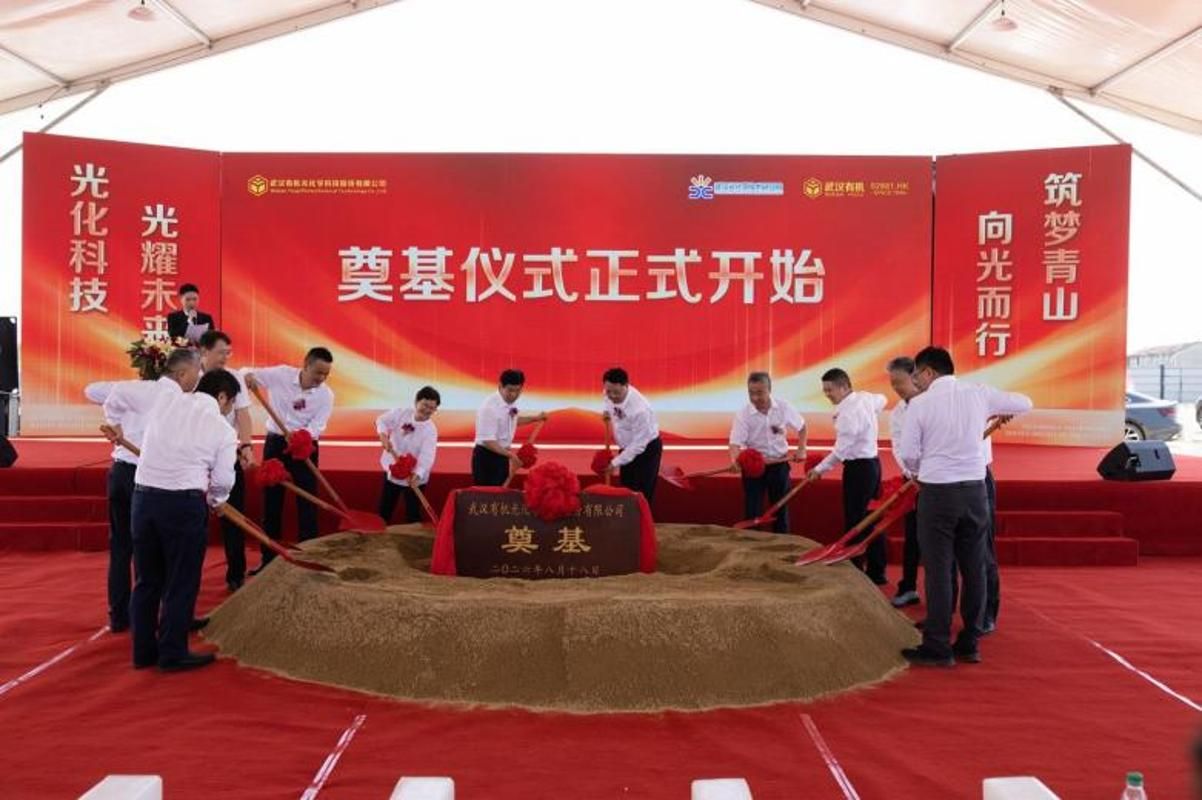
The project is the world’s first industrial application of visible-light photocatalytic oxidation at single-train kiloton scale-a milestone in moving photochemical technology from the laboratory to industrial production.
President Peng Shuangjie noted that fine chemicals underpin the national economy and that aromatic aldehydes are widely used in pharmaceuticals, fragrances and new materials, yet key products have long depended heavily on imports. He encouraged the research team to stay committed to serving the country through science, ground their work in real industrial needs and carry results out of the lab and into factories.
Covering 56 mu (about 3.7 hectares), the project will build three Class-A standardized workshops plus supporting storage and utility facilities, with total investment of 187 million yuan. Designed as an intelligent, green and high-end production and R&D base, it will have an annual capacity of 15,000 tonnes of aromatic aldehydes and esters, replacing traditional heavily polluting oxidation routes and fully substituting imports. At full capacity it is expected to generate 550 million yuan in annual output value. Products — benzaldehyde, substituted aromatic aldehydes and benzoate esters — serve fragrances, pharmaceutical intermediates, pesticides, high-end coatings and daily chemical materials.
The breakthrough rests on years of industry-academia collaboration: a joint photochemical research center was established in May 2022, the Wuhan institute followed in October the same year, and after four years the team advanced from kilogram-scale tests to 100-kilogram pilot verification, overcoming catalyst development, selectivity control and scale-up challenges. CCNU said it will deepen university-industry collaboration to industrialize more research results and support the green, low-carbon development of Wuhan’s chemical sector.








 Chinese