On the afternoon of March 20, Mr. Lin Yong, Director of Global Affairs of Charles Darwin University, Australia, visited Central China Normal University (CCNU). A discussion meeting was held with directors from the Faculty of International Engagement, the School of Urban and Environmental Sciences, and the Faculty of Artificial Intelligence in Education.
Hong Feng, Director of Faculty of International Engagement, extended a warm welcome to Mr. Lin Yong. He introduced CCNU’s characteristics, disciplinary strengths and overall layout of internationalization, and shared the university’s achievements and international cooperation experience in artificial intelligence in education, environmental science and other fields. Mr. Lin Yong introduced Charles Darwin University’s development history, core faculties, featured research areas and international cooperation layout.
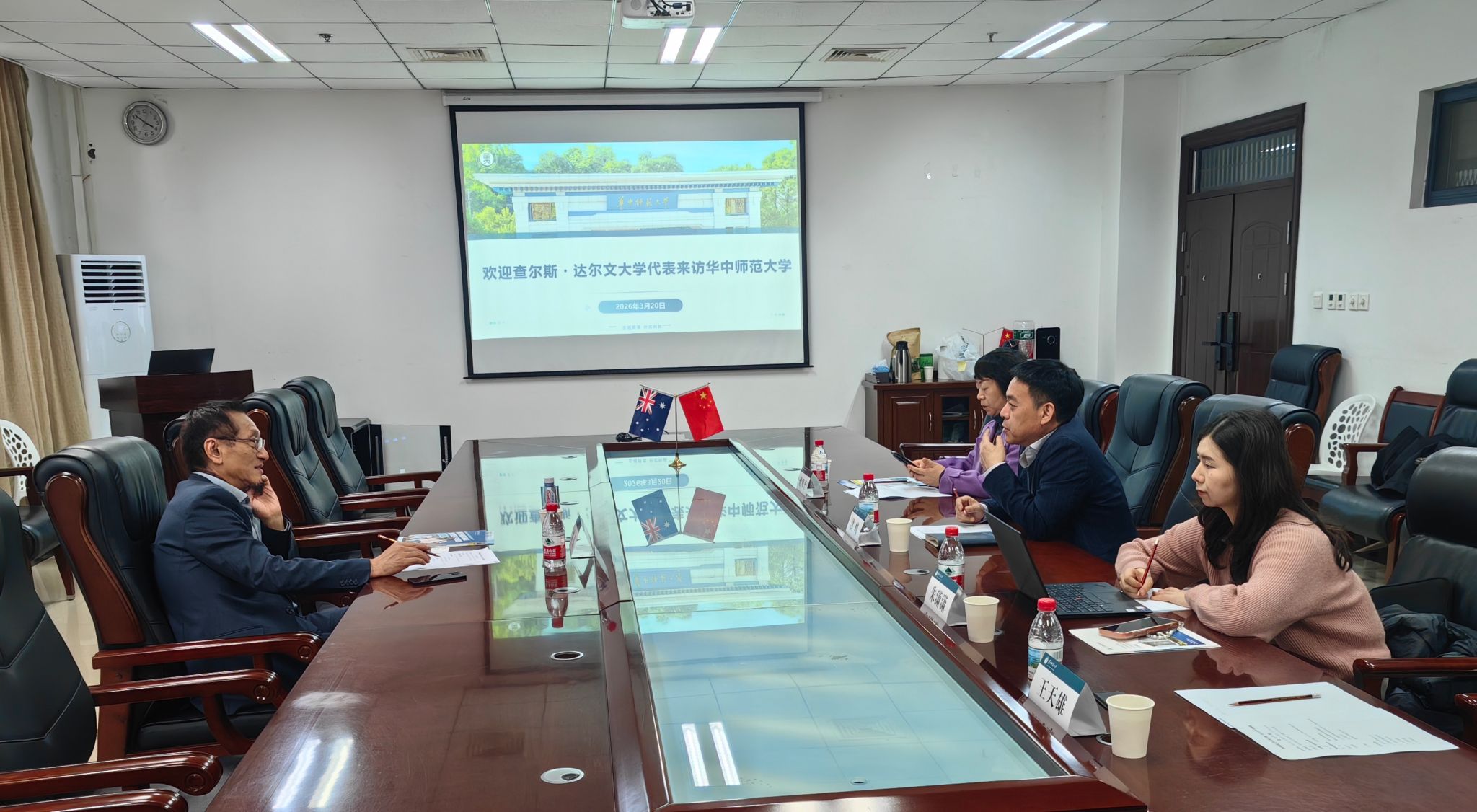
Participants from both sides had in-depth exchanges on cooperation modes in talent cultivation, including joint doctoral supervision, short-term student exchange programs and featured credit programs. They also held detailed discussions on such topics as joint construction of research platforms, joint application for international research projects, and two-way exchanges between teachers and students.
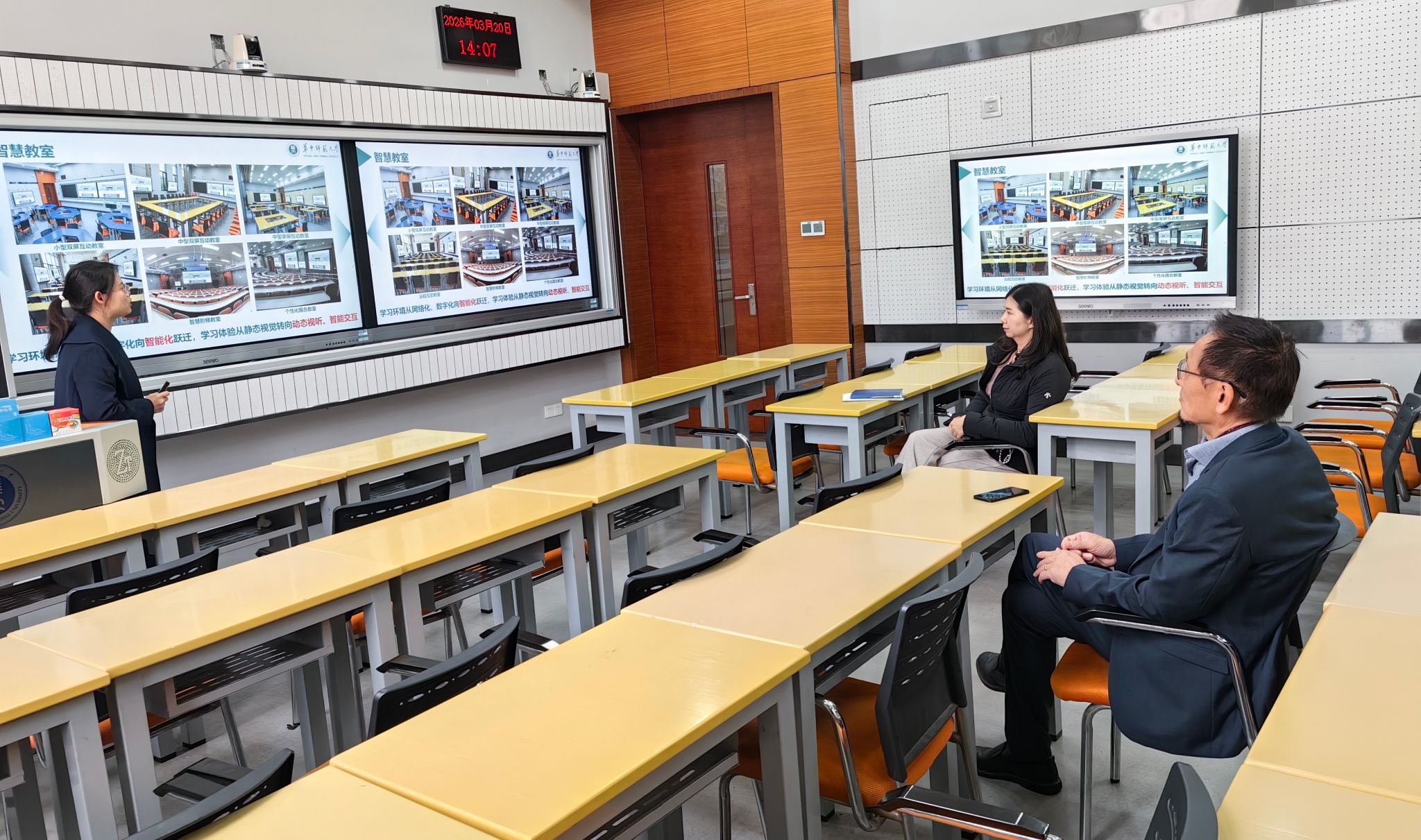
During the visit, Mr. Lin also visited the smart classrooms and the big data exhibition hall of the National Engineering Center of CCNU. He experienced the university’s achievements and cutting-edge exploration in educational digitalization and intelligentization at close range, and spoke highly of CCNU’s educational characteristics and innovative practices.
Charles Darwin University is the only public comprehensive research university in the Northern Territory of Australia. As Australia’s first dual-sector university, it provides both higher education and vocational education, with more than 30 years of experience in online education. It has distinctive strengths in Indigenous studies, tropical health, environmental science and other fields. The two universities have previously conducted academic exchanges through the Artificial Intelligence and Education Forum, laying a sound foundation for this in-depth cooperation negotiation.







 Chinese